



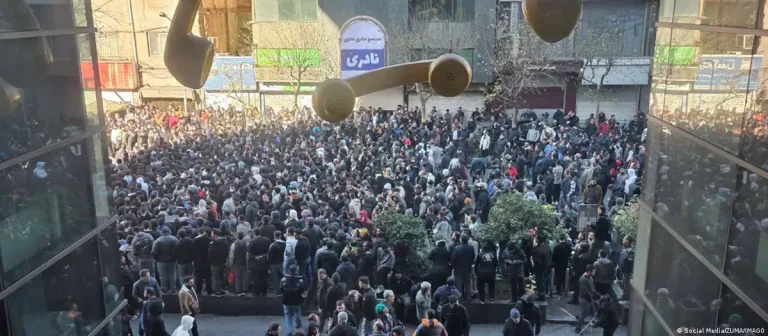
A wave of protests is sweeping across Iran, which is mired in a deep economic crisis marked by an unprecedented drop in the value of the rial and surging inflation.
But the demonstrations, which began with a merchants’ strike in Tehran on December 28 and have grown as students joined the movement, go beyond the country’s economic woes.
Experts say the protests — the most significant challenge to the Islamic regime since the “Women, Life, Freedom” movement of 2022 — are a reflection of widespread and growing political discontent and anger at the government.
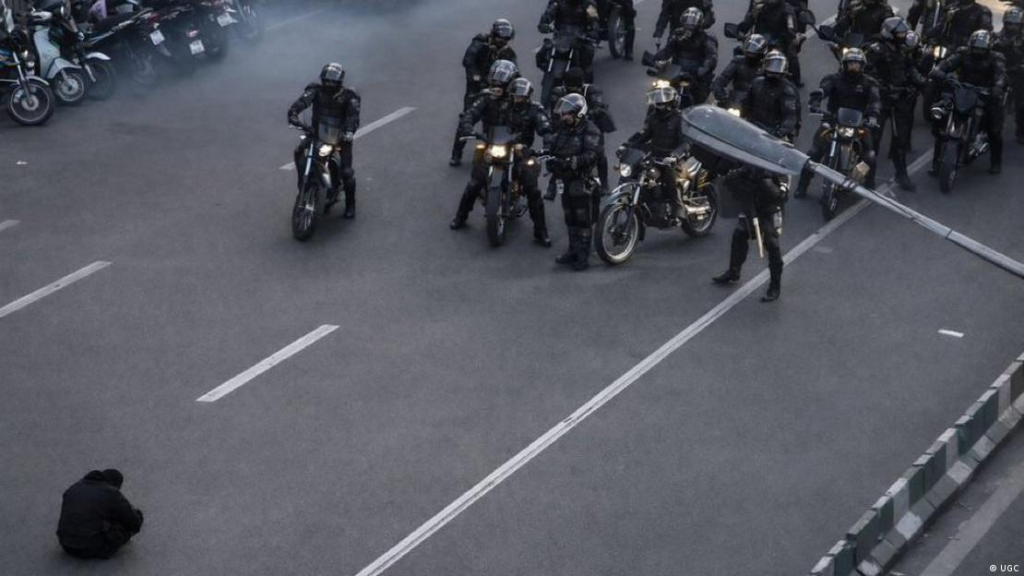
Image: UGC
‘Public trust in the government has eroded’
Videos circulating on social media show Iranian police forces using tear gas and plastic bullets against protesters.
Demonstrators are directing their anger at the country’s Supreme Leader Ali Khamenei and the Islamic Republic’s foreign policy, with footage online showing people chanting slogans like “Death to the dictator” and “Neither Gaza nor Lebanon, my life for Iran.”
Kasra Qaredaghi, a PhD student in political science at the University of Central Florida in the US, said protests often start with economic concerns, which evolve into broader political demands.
“In such a setting, when living costs rise, but incomes and job security don’t keep pace, livelihood grievances quickly turn into dissatisfaction,” Qaredaghi told DW.
“This economic crisis is unfolding in a context where public trust in the government’s ability to control inflation and create stability has eroded,” he added.
Iran’s government has been accused of widespread corruption, while protesters also allege authorities are prioritizing support for proxies abroad — like Palestinian militants Hamas and Lebanese group Hezbollah — over domestic welfare, as well as suppressing freedoms.
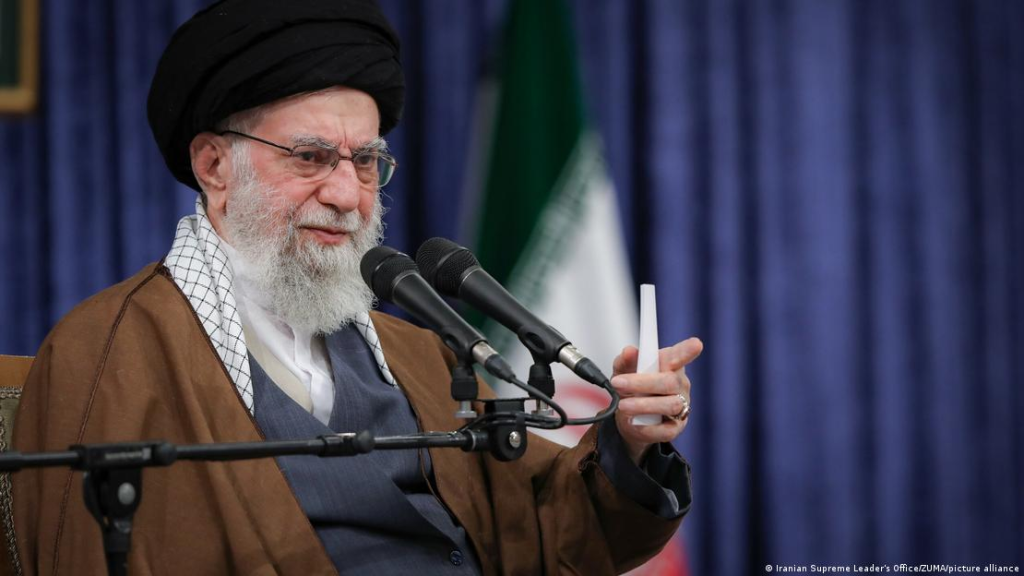
[FILE: October 20, 2025]Image: Iranian Supreme Leader’s Office/ZUMA/picture alliance
What is driving the protests?
An economic crisis has seen Iran’s currency, the rial, plummet to an all-time low of 1.4 million rials per US dollar. Meanwhile, inflation has soared to over 42%, driving up prices of essential goods. Basic food supplies can easily eat up an entire month’s salary.
Adnan Hassanpour, an Iranian-Kurdish journalist, political activist, and former prisoner living in Paris, explained that the harsh economic conditions and the mounting pressure on people’s livelihoods have been the main triggers for the protests.
“This buildup, combined with stagflation, has made life extremely difficult for people and sparked the current unrest,” said Hassanpour.
Qaredaghi agreed, highlighting the volatile “combination of ‘currency shock’ and ‘chronic inflation'” in which “people and businesses can no longer make even basic economic decisions — from buying and saving to planning for work, trade and education.”
And while economic factors are fueling the unrest, Hassanpour pointed out that the “demonstrations are multifaceted.”
“Dissatisfaction toward the regime has reached a peak across all sectors,” he said. “Based on one survey, discontent stands at 92%.”
How has the government responded?
Masoud Pezeshkian, Iran’s president, has replaced the central bank chief and promised dialogue with the protesters’ representatives.
The president’s executive deputy, Mohammad Jafar Ghaempanah, has even apologized for the rampant inflation, framing the crisis as a result of the Western sanctions and the “economic war” being waged against Iran.
The government, through state-backed media, has acknowledged the public’s dissatisfaction, but the issue has been portrayed as “non-political,” with authorities insisting that it is merely “livelihood-related,” said Qaredaghi.
But he dismissed this response as “short-term ‘signaling” that the government is taking action. “It is insufficient.”
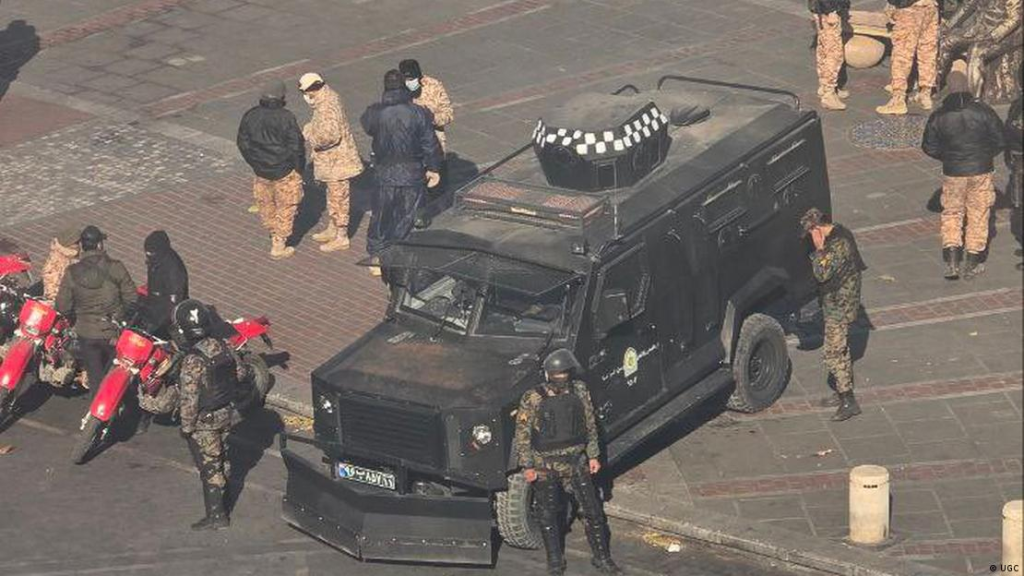
Image: UGC
Although economic reforms might help quell the protests in the short term, “such measures won’t alleviate public discontent at all as they won’t lead to meaningful, tangible changes in people’s lives,” said Hassanpour.
While the government has acknowledged the protests and pledged to address the crisis, the country’s prosecutor general has warned of a crackdown against any transformation of protests into “riots.”
The last significant challenge to the regime’s authority, during the “Women, Life, Freedom” protests in 2022, was suppressed by a brutal crackdown that saw hundreds killed and thousands imprisoned, according to various human rights groups.
Is the Islamic Republic on the verge of collapse?
Opposition figures in exile have said the latest unrest could spell the end of the road for the regime, which has been in power since the 1979 revolution and the overthrow of Iran’s shah.
Nobel Peace Prize laureate Shirin Ebadi said Tuesday in a message on Instagram that “the Islamic Republic is in its final days,” as she urged people to channel their anger to tear down the “cloak of tyranny.”
Reza Pahlavi, the son of Iran’s last shah, has urged people to join the protests. “I ask all sectors of society to join your compatriots in the streets and raise the cry for this regime’s downfall,” he said on Instagram this week.
Pahlavi also called on Iran’s security forces to side with the people, saying, “This system is collapsing. Don’t stand against the people.”
Mostafa Tajzadeh, an imprisoned political activist, warned in a statement from Evin Prison that the lack of a clear path out of the crisis could rapidly push Iran toward “anarchy and chaos.”
Qaredaghi predicted that unless the economic issues are addressed, the movement could grow beyond “livelihood grievances into broader social and political demands.”
“The recent student mobilization, along with more openly political slogans such as ‘Death to the dictator,’ suggests a growing potential for diffusion and contagion across social strata,” he said.
Hassanpour also noted that without profound political changes and an agreement with the West to lift sanctions, the protests will persist.
“Even if the regime succeeds in suppressing these protests, without deep political changes and a comprehensive agreement with the West — especially the US — that leads to lifting sanctions and reintegrating Iran into global economic equations, public protests will undoubtedly return to the streets,” he said.