




The United States’ military campaign against Iran has already generated billions of dollars in costs within its first days, and analysts say the pace of spending could soon force the Pentagon to request supplemental funding from Congress.
Early estimates suggest the financial burn rate of the conflict is extremely high compared with recent U.S. wars.
A study by the Center for Strategic and International Studies estimated that the first 100 hours of the conflict cost roughly $3.7 billion, driven by the large-scale use of precision munitions, missile defenses, and the rapid deployment of major naval and air forces.
That translates to an average spending rate of about $891 million per day during the opening phase of operations.
By the end of the first week, Pentagon officials told lawmakers the total cost had climbed to roughly $6 billion, reflecting continued strikes, naval operations, and defensive missile intercepts against Iranian attacks.
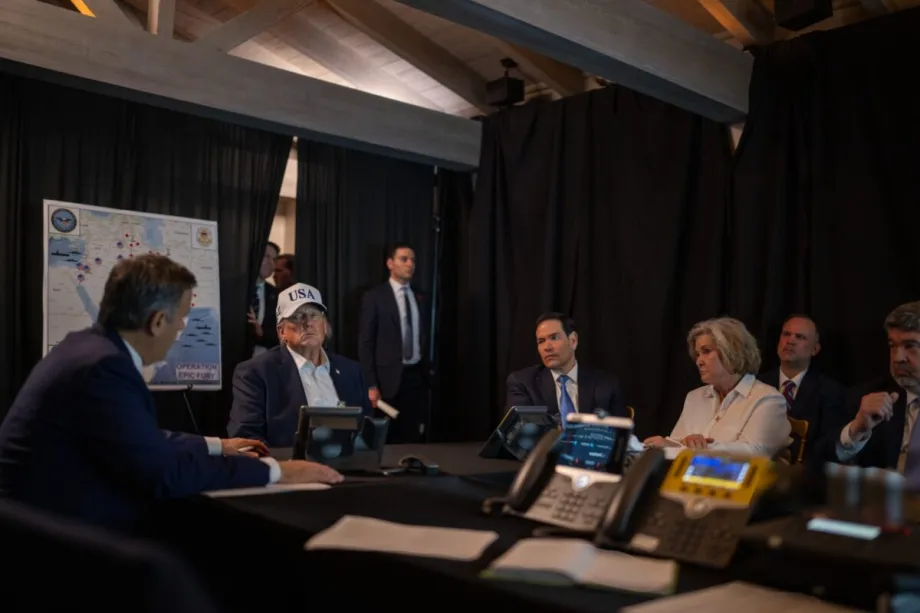
These figures include the cost of deploying tens of thousands of troops, more than 200 aircraft, and multiple aircraft carrier strike groups, as well as thousands of precision-guided munitions used in early strikes.
Additional costs are being driven by missile defense. Interceptor missiles used to shoot down Iranian ballistic missiles and drones cost millions of dollars each, and large numbers have reportedly been fired in the early days of the conflict.
Because the war began without a dedicated appropriation, much of this spending is coming out of existing Pentagon accounts, including operations, maintenance, and weapons stockpiles.
Defense analysts warn that if the conflict continues at the current intensity, the Pentagon could burn through tens of billions of dollars within a few months. As a result, officials in Washington are already discussing the possibility of a supplemental funding request of roughly $50 billion to sustain operations and replenish munitions.
Such requests are common in major conflicts. While the Pentagon can temporarily fund military operations using existing appropriations and by shifting funds between accounts, prolonged high-intensity combat—especially one involving heavy missile defense and large naval deployments—can rapidly strain the defense budget.
The Political Challenge of Passing a War Funding Bill
Even if the Pentagon requests supplemental funding, passing a war funding bill through Congress could prove politically difficult—especially in the Senate.
In the House of Representatives, a funding bill requires only a simple majority. If the Republican majority remains unified, it is theoretically possible for a war funding package to pass the chamber without Democratic support.
The Senate, however, presents a much larger obstacle.
Most legislation in the Senate is subject to the filibuster, which means 60 votes are required to advance a bill to final passage. With Republicans holding roughly 53 seats, they would likely need at least seven Democratic votes to move a supplemental war funding bill forward.
That requirement gives the Democratic minority significant leverage. Some Democratic lawmakers have already argued that Congress should vote to authorize the war before approving funding, as reflected in the recent failure of the War Powers Resolution vote.
As a result, the administration could face a difficult political path:
- convince a group of Democratic senators to support war funding,
- attempt to change Senate rules to bypass the filibuster.
Historically, most large war appropriations have ultimately passed with bipartisan support. But in a highly polarized Congress, securing those votes may prove to be one of the central political battles surrounding the war.
Advancing the Iran war supplemental funding bill may provide President Trump with another political vehicle to push his long-standing goal of scrapping the Senate filibuster.
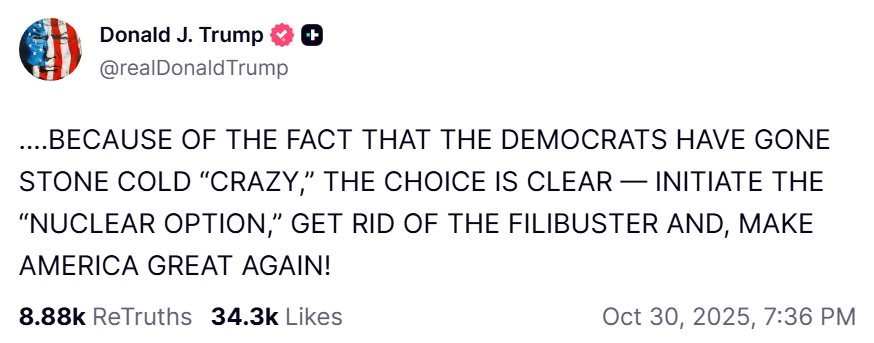
President Trump is already pressuring Republicans to end the filibuster by threatening a legislative blockade by not signing any new bills until Congress “passes a controversial voter-ID measure known as the Save America Act.” Democrats strongly oppose the measure, viewing it as a way to create obstacles—often for their own base—to casting ballots, and aimed at influencing the consequential outcome of the 2026 midterm elections.
By framing the coming war funding bill as urgent national security legislation, Trump could further argue that the 60‑vote threshold is an obstacle to defending U.S. forces and allies, creating a sense of immediacy and bipartisan pressure.
This scenario gives him a potential cover to continue to push Senate Republicans to adopt the “nuclear option”, allowing the party to pass the war funding—and potentially other priority legislation—by simple majority rather than needing any Democratic votes. If successful, such a move would represent a monumental shift in Senate power, enabling Republicans to enact sweeping policies on national security, social issues, and domestic spending without compromise.

Weapons and Funding Diverted From Ukraine
Another growing concern in Washington is how the Iran war may affect U.S. military aid to Ukraine, which already depends heavily on American weapons, funding, and missile defense systems.
The United States has provided tens of billions of dollars in military aid to Ukraine since Russia’s full-scale invasion began in 2022, including advanced air defense systems such as Patriot missile batteries and large quantities of interceptor missiles.
Those same systems are now being used extensively in the Middle East.
Defense analysts warn that the Iran conflict could divert critical missile defense supplies away from Ukraine, particularly Patriot interceptor missiles used to defend cities and energy infrastructure from Russian strikes.
Patriot interceptors are in especially high demand because they are being used to shoot down Iranian ballistic missiles and drones targeting U.S. bases and allied countries in the Middle East.
Ukraine relies heavily on these same interceptors for its air defense network, raising concerns that a prolonged Middle East conflict could reduce the supply available to Kyiv.
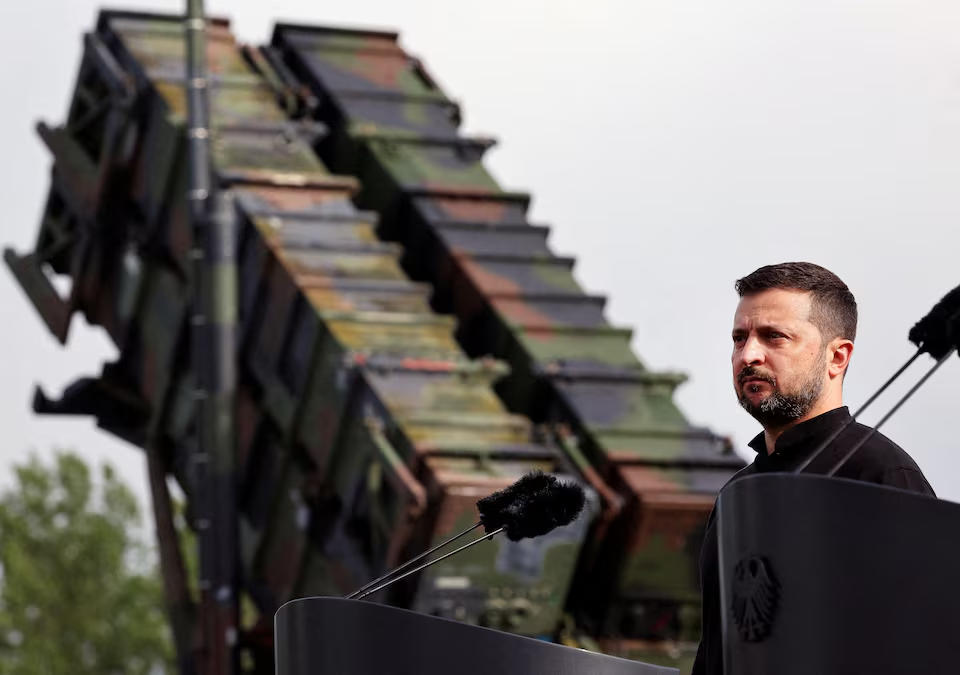
Production limits are a major factor. The United States currently produces roughly 600 Patriot PAC-3 interceptor missiles per year, a number that analysts say is insufficient to simultaneously meet the needs of Ukraine, U.S. forces, and Middle Eastern allies during a high-intensity conflict.
The issue is not limited to missiles. Defense planners also worry about shortages of precision-guided munitions, naval interceptors, and other high-end weapons, which are being consumed rapidly in the Iran conflict.
Some officials believe this dynamic could create a strategic ripple effect across multiple conflicts. A prolonged Middle East war could drain weapons stockpiles not only needed for Ukraine but also for potential contingencies involving China in the Pacific.
Ukrainian officials have acknowledged the risk. President Volodymyr Zelensky has warned that if the Middle East war continues, the United States may prioritize air defense systems for its own forces and allies in the region, potentially reducing supplies sent to Ukraine.
For now, there has been no official announcement that U.S. aid to Ukraine will be reduced. But the competing demands of two simultaneous conflicts are already forcing defense planners to make difficult decisions about how limited weapons stockpiles are allocated.